

Elite Dialogue on “Academic Deliberation and Mutual Understanding Regarding Recent Developments and Incidents in Iranian Society”
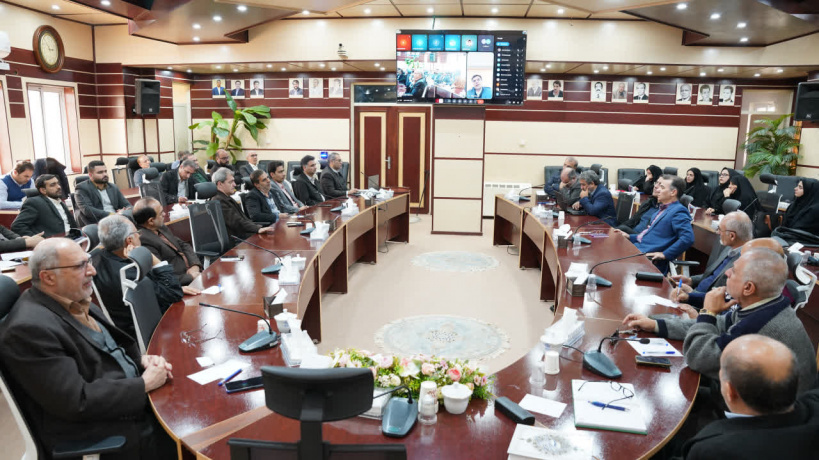
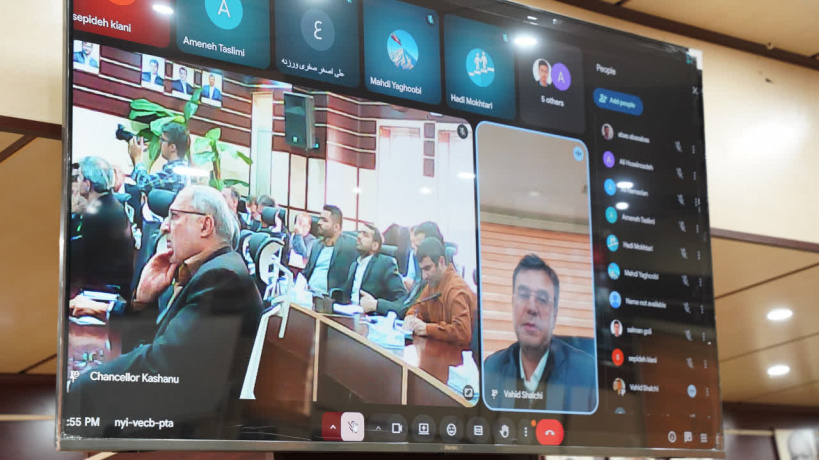
The third session of the elite dialogue titled “Academic Deliberation and Mutual Understanding Regarding Recent Developments and Incidents in Iranian Society,” held with the online participation of the Deputy Minister of Science, Research and Technology for Cultural and Social Affairs, took place on Monday, 20 Bahman, at Shahid Soleimani Hall of the University of Kashan.
Dr. Vahid Shalchi, Deputy Minister of Science, Research and Technology for Cultural Affairs, expressed appreciation for the commendable initiative of the University of Kashan in organizing a forum for academic deliberation aimed at analyzing the root causes of recent incidents through the engagement of university faculty members. He stated that the country is currently facing special circumstances, and that the consequences of the recent events, including the severity of the developments and the loss of lives, represent a profound and painful tragedy that necessitates reassessment and collective reflection to overcome these challenges.
He identified the analysis of the factors behind protest movements, existing social anomalies, and the presentation of a clear structural model for protest as issues requiring careful consideration and renewed reflection. He added that economic and livelihood crises, pressures arising from sanctions and war, have contributed to the intensification of social protests.
Dr. Shalchi noted that from a social perspective, the decline in social capital and widespread dissatisfaction—particularly among young people under the age of 30, a significant proportion of whom are reportedly among those detained—have created a context conducive to protest movements.
He further stated that environmental issues, water crises, foreign policy challenges, and the weakening of domestic media authority—accompanied by the growing dominance of external narratives and the emergence of cross-border media networks in place of domestic outlets—have evolved into another dimension of crisis. Alongside these challenges, he referred to security concerns and threats posed by Israel and its allies, as well as global competition in the nuclear arena and the influence of Western media within the domestic sphere.
The Deputy Minister added that the country’s social capital has experienced a downward trend in recent decades, and inefficiencies rooted in the past have now become more visible structural weaknesses.
Dr. Shalchi also referred to certain historical achievements of the country, including experiences of democracy and popular governance, as well as historical awareness regarding foreign domination and the role of certain coups in Iran’s history. He emphasized that democracy in Iran faces both internal and external obstacles, and that contemporary discourses representing protest movements are, at a psychological level, often accompanied by elements of anger and resentment that may lead to prolonged violence if not addressed through approaches grounded in tolerance and pluralism.
He observed that historical experiences in Iran demonstrate that peace, independence, and consensus can be sustained through pluralistic and tolerant discourses. He stressed that efforts should focus on preventing extremist tendencies and strengthening narratives aligned with social understanding and cohesion.
The Deputy Minister for Cultural Affairs further stated that the formation of multiple internal and external consensuses, along with the resolution of differences through diplomacy, could contribute to the improvement of Iran’s socio-political conditions. He noted that this path requires a reassessment of prevailing discourses and the reinforcement of mutual understanding.
During the session, faculty members of the University of Kashan also presented their views and perspectives on the issues discussed.

Your Comment :